


How Do You Motivate a Team?
You don’t. You understand what already motivates the people in it.
“How do I motivate my team?”
It’s a question I’ve been asked throughout my career.
It came up repeatedly during a series of Perfect Teams® workshops we ran in 2021, when organisations were wrestling with remote working, hybrid working and bringing people back together after the pandemic.
But the question wasn’t new then.
And it certainly isn’t new now.
Leaders have been trying to motivate people for as long as there have been organisations.
Bonuses.
Targets.
Away days.
Recognition schemes.
Promotions.
Perks.
Purpose statements.
Some work brilliantly for some people.
And leave others completely cold.
Why?
Because people are motivated by different things.
EVERYBODY IS ALREADY MOTIVATED
This is where I think we sometimes start in the wrong place.
We talk about motivation as though it’s something a manager has to inject into another person.
But people are already motivated.
They get out of bed.
They make choices.
They pursue things.
They avoid things.
They devote extraordinary amounts of energy to activities that matter to them.
So perhaps the question isn’t:
How do I motivate this person?
It’s:
What already motivates them?
That’s a very different starting point.
MOTIVATION IS ABOUT ATTENTION
I’ve used a simple idea for years:
Motivation is about where people put their attention.
Watch somebody closely and you’ll begin to see it.
What do they notice?
What do they talk about?
What do they volunteer for?
What gives them energy?
What frustrates them?
What do they pursue without being asked?
Attention gives us clues about motivation.
And different characters naturally place their attention in different places.
DIFFERENT CHARACTERS. DIFFERENT MOTIVES.
At Perfect Teams®, we identify 12 characters built around three fundamental ways of processing information and seeing the world.
At the broadest level, we describe them as:
Red — Feel.
Green — Go.
Blue — Think.
Those different orientations are associated with different motives.
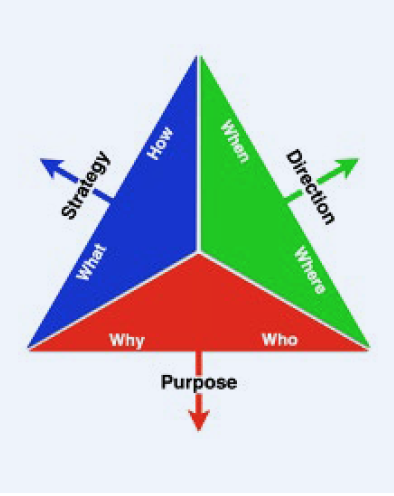
Red characters tend to place greater value on affiliation and relationships.
Green characters are more naturally attracted towards power and risk — the opportunity to influence, act, challenge and move things forward.
Blue characters tend towards achievement and security — accomplishing something, understanding it properly and creating sufficient certainty around what happens next.
None is better.
They’re simply different.
And that difference matters enormously to leadership.
THE SAME MESSAGE DOESN’T LAND THE SAME WAY
Imagine announcing an ambitious new project to three people.
One hears:
“This is an opportunity to make a real difference.”
Another hears:
“This is going to involve working with some fascinating people.”
The third wants to know:
“What exactly are we trying to achieve, and how will we know we’ve succeeded?”
Same project.
Different attention.
Different motivation.
A capable leader learns to recognise those differences.
Not to manipulate people.
But to connect what needs to be done with something that matters to the person being asked to do it.
MONEY DOESN’T MOTIVATE EVERYBODY IN THE SAME WAY EITHER
This is particularly important because organisations often assume that incentives are universal.
Pay matters, of course.
But two people receiving exactly the same bonus may experience it quite differently.
For one, it represents achievement.
For another, security.
For another, recognition.
For somebody else, the money may matter considerably less than autonomy, relationships, challenge, purpose or the opportunity to grow.
The reward is the same.
The meaning isn’t.
That’s why understanding motives is more useful than simply assembling a list of “ways to motivate employees”.
MOTIVATION AND PURPOSE ARE CONNECTED
There’s another level to this.
People can be motivated to complete a task.
But sustained commitment usually requires something more.
Why does this matter?
We’ve used another simple expression at Perfect Teams® for years:
No why = no way.
A leader can provide targets, deadlines and instructions.
But when people understand why their contribution matters, something changes.
The task becomes connected to a larger purpose.
That doesn’t mean every organisation needs a grandiose mission to change the world.
Purpose can be very practical.
Serving the client.
Helping a colleague.
Building something worthwhile.
Solving a difficult problem.
Providing for a family.
Becoming exceptionally good at something.
Different people find purpose in different places too.
MOTIVATION ISN’T ENGAGEMENT
We often use the words interchangeably, but I think there’s a useful distinction.
Someone can be highly motivated — just not towards what the organisation wants.
They may be motivated to protect their position.
Avoid risk.
Find another job.
Build a side business.
Get through the day with the minimum possible effort.
The motivation exists.
Their attention is simply somewhere else.
That creates a much more interesting management question:
How do we create enough alignment between what matters to the individual and what the organisation is trying to achieve?
That’s where leadership begins.
YOU CAN’T MANAGE EVERYBODY THE SAME WAY
Fairness doesn’t require treating everybody identically.
People need different things from their leaders.
One person may thrive on public recognition.
Another may hate it.
One wants autonomy.
Another wants clear structure.
One wants regular feedback.
Another simply wants you to trust them and get out of the way.
The more a leader understands the character and motives of the people around them, the more intelligently they can lead.
That’s not soft management.
It’s human capability.
SO, HOW DO YOU MOTIVATE YOUR TEAM?
Start by changing the question.
Don’t ask:
How do I motivate them?
Ask:
What motivates them already?
Where does their attention naturally go?
What matters to them?
What gives them energy?
What contribution do they want to make?
And how can that connect with what the team is trying to achieve?
Because a team isn’t one motivational unit.
It’s a collection of different human beings.
Understanding those differences is one of the capabilities of leadership.
Nobody is perfect.
But your team can be.
You can’t download capability.™
What motivates the characters in your team?
Perfect Teams® helps leaders understand the character, motives and communication preferences of the people around them — so they can lead individuals rather than manage everyone the same way.
Originally published 10 August 2021. Updated August 2026.
 Article by: