


You can’t control everything that happens. But surrendering control of what happens next is a choice.
Stress is real.
So are anxiety, exhaustion, uncertainty and overwhelm.
And when somebody is genuinely struggling with their mental health, telling them simply to “think positively” isn’t helpful.
Sometimes people need professional support.
But there’s another truth I’ve spent much of my life exploring.
We have more influence over our response to circumstances than we sometimes realise.
Not absolute control.
Influence.
And the distinction matters.
Because if you’re leading other people, how you deal with pressure doesn’t stop with you.
Leaders don’t have private moods.
Your stress can become everybody else’s stress.
Your panic can become their panic.
Your cynicism can become their cynicism.
And your ability to remain purposeful, responsible and capable when things get difficult can spread too.
START WITH THE PERSON IN THE MIRROR
Before asking what’s wrong with your team, look at yourself.
I’ve written elsewhere about a client who was in a pretty dark place when I first met him.
He was aggressive.
Confrontational.
Unhappy.
He was looking for conflict and, unsurprisingly, finding it.
Over time, his outlook and behaviour changed dramatically.
So did his leadership.
So did his life outside work.
Eventually his children sent me a card thanking me for:
“Giving us our dad back.”
That experience reinforced something I’ve believed for decades.
You can’t always change what’s happening around you.
But there are things you can do to change how you meet it.
Here are eleven I’ve found useful.
1. DON’T SUFFER TWICE
Montaigne is widely credited with a wonderful observation to the effect that his life had been filled with terrible misfortunes — most of which never happened.
We’ve all done it.
Something might happen.
So we imagine it happening.
Then imagine the consequences.
Then imagine the consequences of the consequences.
Ten minutes later we’re emotionally responding to a catastrophe that exists entirely in our head.
Planning for risk is useful.
Practising disasters that haven’t happened isn’t.
Ask:
Is this happening — or am I imagining it happening?
2. LIVE IN DAY-TIGHT COMPARTMENTS
I learned this from Dale Carnegie many years ago.
His phrase was:
“Day-tight compartments.”
Yesterday has happened.
Tomorrow hasn’t.
Today is where you can act.
That’s not an argument against planning.
I’ve spent my life planning.
It’s an argument against attempting to live tomorrow before you’ve finished today.
What’s the problem immediately in front of you?
What can you do about it?
Do that.
Then do the next thing.
3. EVEN THE DARKEST HOUR ONLY HAS SIXTY MINUTES
I’ve always loved this thought.
When something feels overwhelming, shrink the timeframe.
Don’t solve your life.
Don’t solve the year.
Don’t even solve the day.
Ask:
What can I do in the next minute?
One phone call.
One conversation.
One decision.
One step.
Capability is often built in remarkably small increments.
4. BE CAREFUL WHAT YOU EXCITE
Here’s the engineer in me.
Every physical structure has natural frequencies.
Repeatedly excite a system at the wrong frequency and something interesting can happen.
Resonance.
The oscillation amplifies.
Keep adding energy and the consequences can become dramatic.
The famous Tacoma Narrows Bridge collapse is often associated with resonance, although the precise engineering explanation is more complicated than the simple textbook story.
But the metaphor remains useful.
What are you repeatedly exciting in your own mind?
The grievance?
The insult?
The fear?
The mistake?
Every time you return to it, you give it more energy.
Stop exciting what you don’t want amplified.
[IMAGE]
5. TAKE RESPONSIBILITY FOR WHAT IS YOURS
This one needs precision.
You are not responsible for everything that happens to you.
Other people have agency.
Circumstances exist.
Bad luck exists.
Illness exists.
Injustice exists.
But responsibility asks a different question:
What can I do about what happens next?
That’s enormously powerful because it moves attention from blame towards agency.
Not:
“Everything is my fault.”
But:
“What is mine to do?”
That’s the Big R.
And it’s one of the foundations of capability.
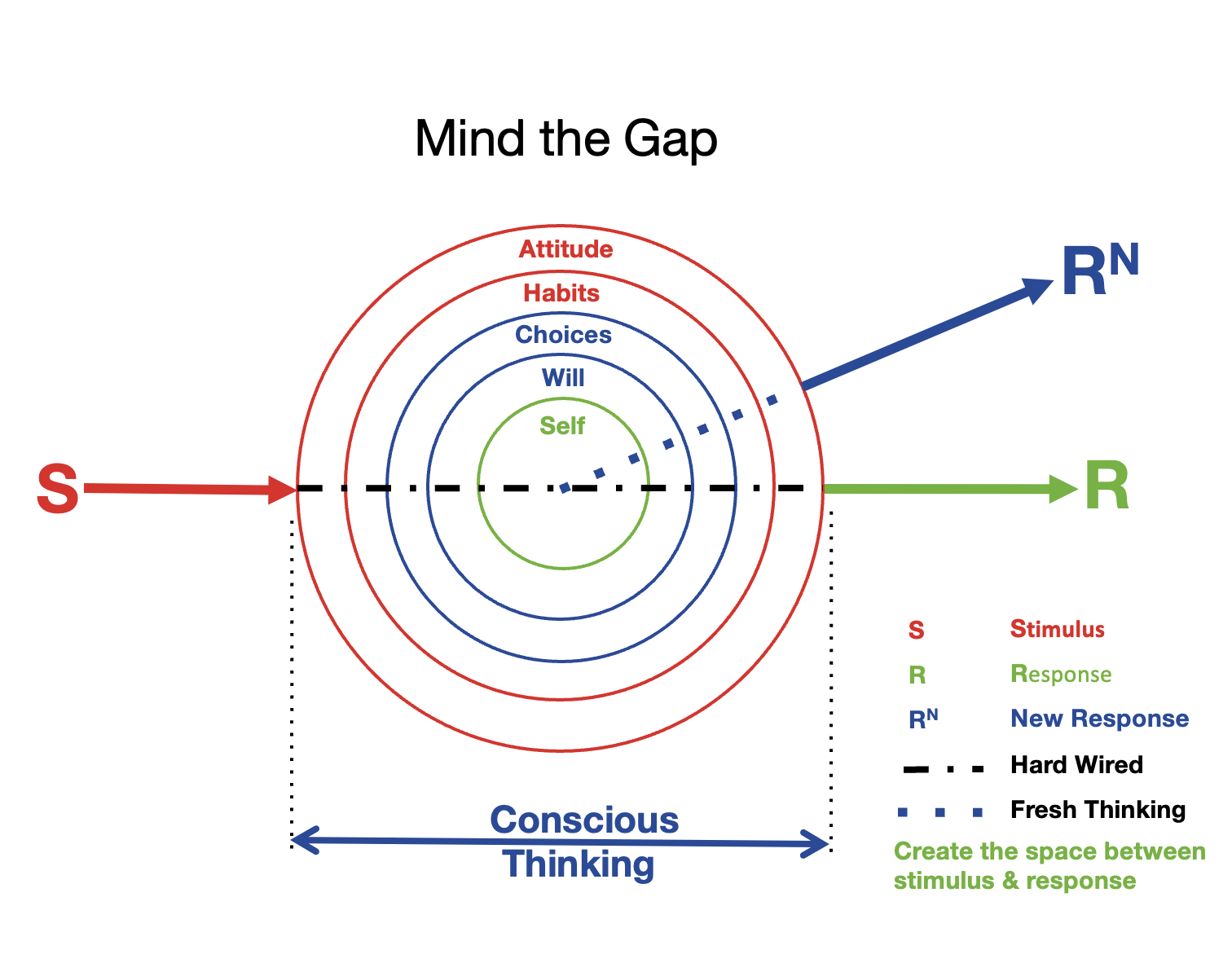
6. FIND THE GAP
Something happens.
Then you respond.
Between the two is a gap.
Sometimes microscopic.
But it’s there.
And in that gap sits one of the most important human capabilities:
Choice.
Someone criticises you.
An email arrives.
A customer complains.
A colleague loses their temper.
A deal falls through.
You feel the reaction rising.
Can you create enough space between stimulus and response to decide what you do next?
The more capable you become of doing that, the less your circumstances automatically determine your behaviour.
Don’t merely react. Respond.
7. HAVE SOMETHING WORTH ENDURING FOR
The Finnish idea of SISU has always fascinated me.
Determination.
Grit.
Fortitude.
The willingness to continue when continuing is difficult.
But resilience without direction can become mere endurance.
So ask:
What am I aiming for?
And:
Why does it matter?
Purpose changes the meaning of difficulty.
A hill is irritating when you’re wandering aimlessly.
It’s part of the journey when you’re climbing a mountain.
8. WHICH GAME ARE YOU PLAYING?
I have a simple model for this.
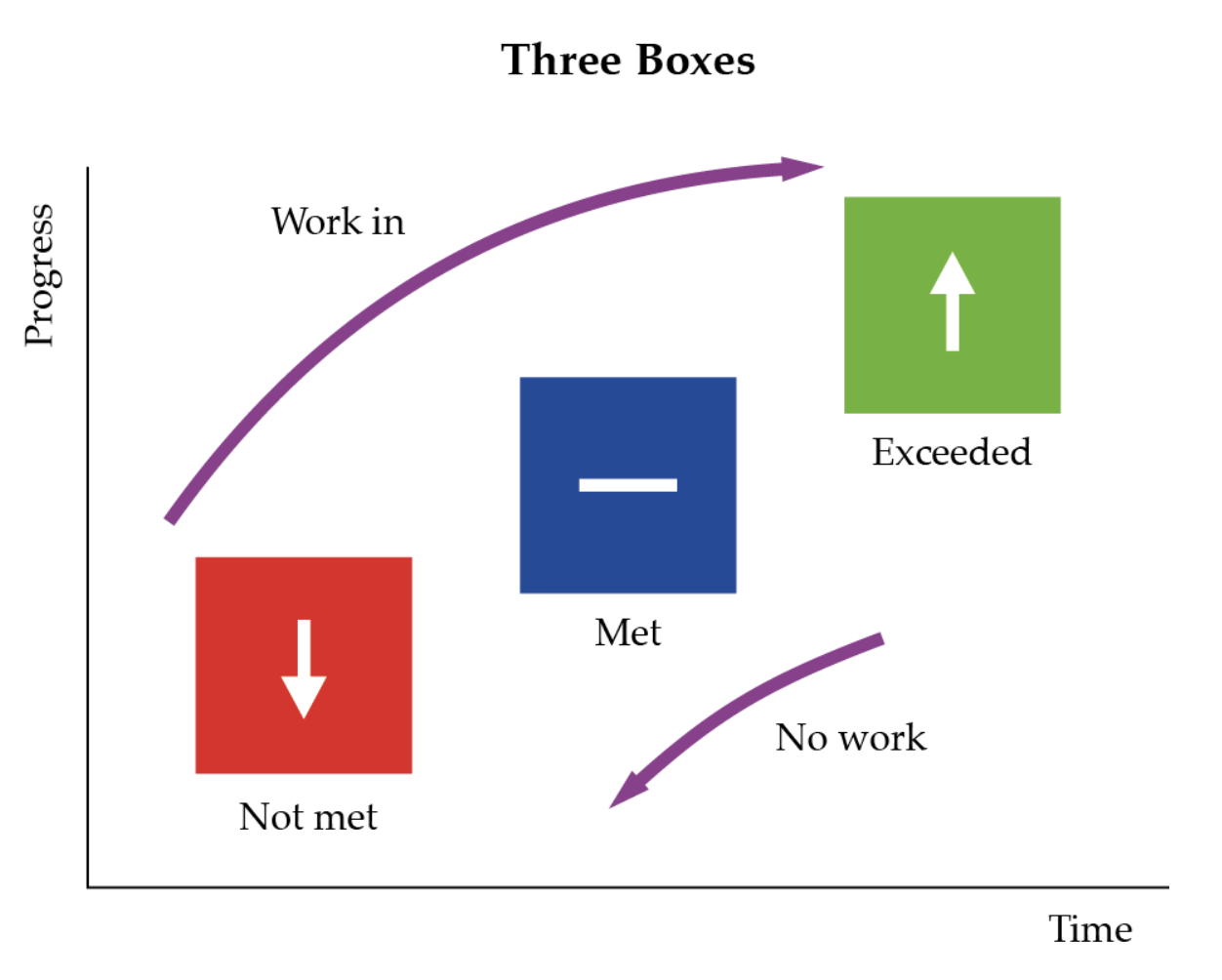
Three boxes.
Box 1: Expectations exceeded. Energy rises.
Box 2: Expectations met. Energy is neutral.
Box 3: Expectations dashed. Energy falls.
Human beings have an irritating tendency to normalise what was once exciting.
The pay rise becomes your salary.
The new car becomes your car.
The promotion becomes your job.
What’s exceptional gradually becomes normal.
Energy naturally dissipates.
So maintaining it requires effort.
I call the choice:
The Up Game or the Down Game.
The Down Game requires almost no effort.
Things decay perfectly well on their own.
The Up Game requires you to put something in.
Energy.
Attention.
Learning.
Purpose.
Action.
Which game are you playing?
9. DON’T CONFUSE DEPENDENCE WITH SUPPORT
Taking responsibility doesn’t mean doing everything alone.
That’s another distinction I’ve come to understand more clearly.
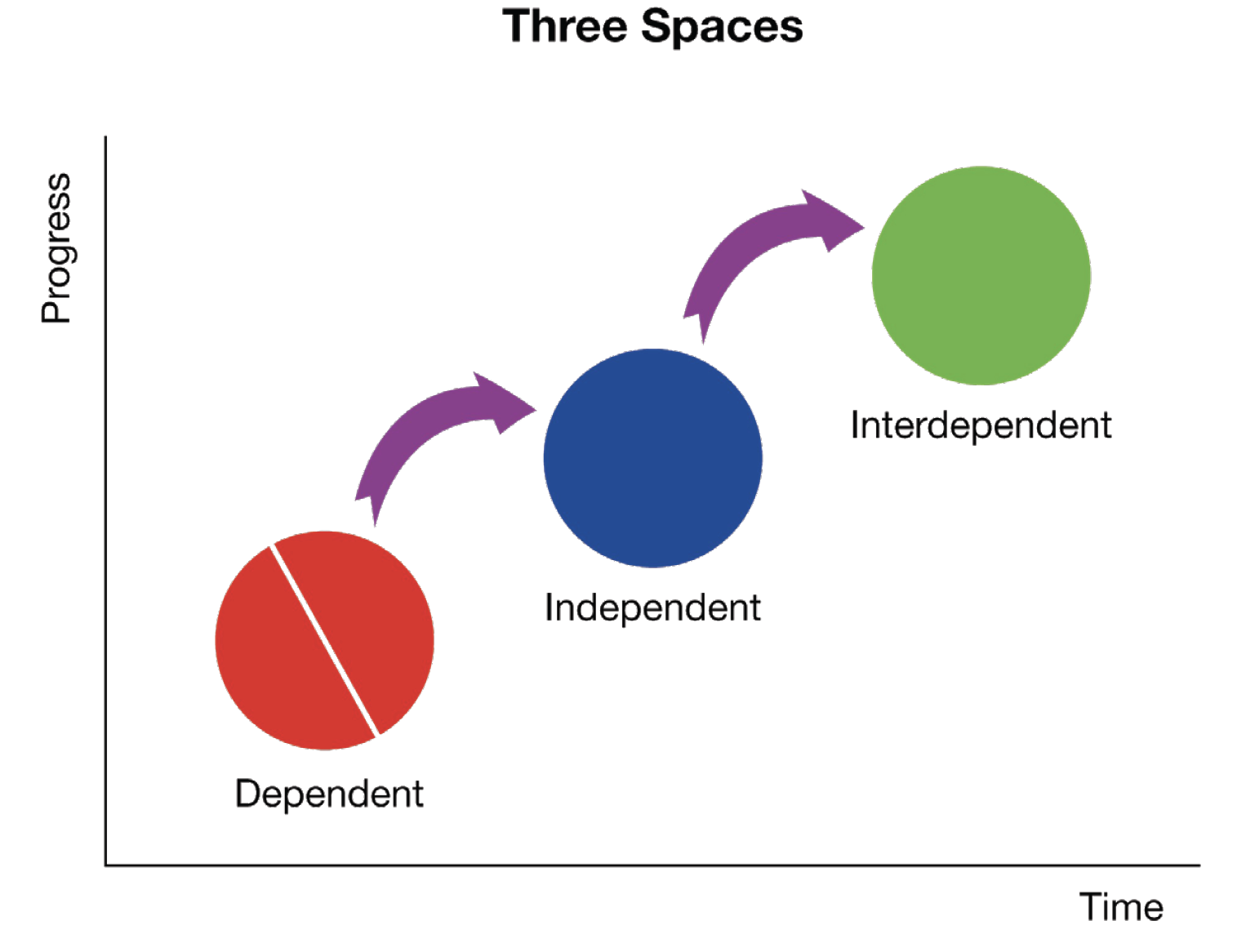
Dependence says:
Do it for me.
Independence says:
I can do it.
Interdependence says:
We can do more together.
Capable people ask for help.
They use coaches.
Friends.
Colleagues.
Doctors.
Counsellors.
Mentors.
Experts.
The difference is that they remain an active participant in what happens next.
Responsibility isn’t refusing support. It’s taking responsibility for seeking the support you need.
And when mental health difficulties are persistent, severe or affecting someone’s ability to function, appropriate professional help matters.
10. CHANGE YOUR WORDS
This takes me all the way back to The A–Z of Positive Thinking.
I became fascinated by the relationship between words and attention.
Listen to yourself.
What language do you habitually use?
Impossible.
Disaster.
Hopeless.
Typical.
Can’t.
Always.
Never.
Now ask whether that language is helping you see possibilities — or closing them down.
Changing a word won’t magically change reality.
But a different word can provoke a different thought.
A different thought can provoke a different question.
A different question can provoke a different action.
And:
Action changes things.
11. SAVE THE BEST FOR LAST
One of the most powerful ideas I’ve encountered came from Viktor Frankl.
Frankl survived the Nazi concentration camps and subsequently wrote Man’s Search for Meaning.
At the heart of his thinking is an extraordinary proposition:
There remains a human freedom in how we respond to circumstances, even when our ability to change those circumstances is severely constrained.
I wouldn’t trivialise that idea by pretending choosing your attitude makes every difficulty disappear.
It doesn’t.
The power lies somewhere else.
Circumstances can constrain your choices without necessarily eliminating your capacity to choose.
And that brings all eleven ideas back to the same place.
STRESS ISN’T A FAILURE OF CHARACTER
People struggle.
Leaders struggle.
I struggle.
Everybody does.
Capability isn’t never feeling overwhelmed, anxious, angry, frightened or exhausted.
Capability is what you are increasingly able to do when you do.
Can you recognise what’s happening?
Can you interrupt the pattern?
Can you direct your attention?
Can you ask for help?
Can you distinguish what you can control from what you can’t?
Can you take responsibility for the next thing that is yours to do?
Can you find purpose?
Can you choose your response?
That’s a much more useful conception of resilience than:
“Be positive.”
Although, as I’ve written elsewhere, I still rather like:
Be Positive – Be Powerful.
Because positivity, properly understood, isn’t pretending the world is wonderful.
It’s refusing to surrender your agency to everything that isn’t.
AND IF YOU’RE LEADING A TEAM…
Don’t diagnose people.
Don’t assume somebody who’s struggling simply needs to “take more responsibility”.
Listen.
Pay attention.
Have the conversation.
Create conditions in which asking for support isn’t treated as weakness.
And know the boundary between leadership support and professional mental-health support.
But don’t underestimate something else either.
Your people watch how you meet difficulty.
Not whether difficulty affects you.
How you meet it.
And that makes resilience more than a personal capability.
It makes it a leadership capability.
You can’t download capability.™
Build more capable leaders and teams
Perfect Teams® helps people understand themselves and each other, communicate more effectively and build the collective capability to work through difficulty together.
Originally published 20 January 2023. Updated August 2026.
 Article by: