
Character over personality
Building better teams
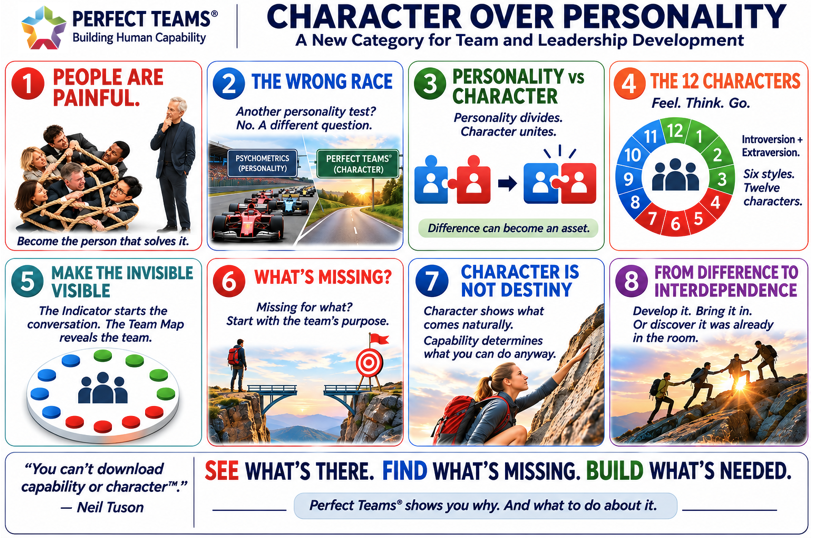
People are painful.
There. I’ve said it.
Not all people. Not all the time. But put a group of perfectly capable, intelligent, experienced individuals together, give them something important to achieve, and watch what happens.
Disagreements. Misunderstandings. Frustration. Politics. Egos. Silos. Meetings about meetings.
And somewhere in the middle, a perfectly sensible leader (sometimes a participant) wondering why the people aren’t working together.
Sound familiar?
The usual response is to send everyone off to discover their personalities.
And there’s certainly no shortage of ways to do that.
Introverts. Extroverts. Colours. Types. Preferences. Profiles.
We discover that Mary likes detail, John likes action, Susan needs time to reflect, and Peter would rather everyone stopped talking and got on with it.
Fascinating.
But has anything actually changed?
Are We in the Wrong Race?
Imagine Formula One.
For decades, manufacturers have competed to build faster cars. Better engines, aerodynamics, tyres and drivers.
Now imagine somebody arrives and says:
“What if we’re not trying to build a faster racing car? What if we’re trying to solve a completely different problem?”
That’s where I believe Perfect Teams® belongs.
We’re not another competitor in the personality-profiling Grand Prix.
We’re not another set of labels or another way of putting people into boxes.
We’re a different category altogether.
For years, we’ve been asking people to understand their personality differences.
Perhaps it’s time we started asking how they can use their different characters to achieve something worthwhile together.
Because the purpose of a team isn’t to understand itself.
The purpose of a team is to achieve something it couldn’t achieve through its members acting alone.
Personality Divides. Character Unites.
That’s a deliberately provocative statement.
Personality differences are real. Understanding them can be useful. I’m not suggesting otherwise.
But personality profiling generally begins by identifying differences between people.
Character-based team development begins with a different question:
What can these people contribute to one another and to the purpose they share?
Personality describes our tendencies and preferences.
Character brings into focus the qualities we demonstrate, the choices we make and the contribution we bring.
Think of the people you’ve most enjoyed working with.
Was it because they shared your personality?
Or because you could rely on them?
Because they took responsibility, and they brought something you didn’t have? Did they challenge you when necessary, support you when it mattered and help you achieve something neither of you could have achieved alone?
That’s the territory I’m interested in.
Not simply what makes people different. But what makes their differences valuable?
Twelve Characters. One Team. Countless Possibilities.
Perfect Teams® works with twelve different character profiles, organised around six styles and the interplay of introversion and extraversion.
The purpose isn’t to award people a label and leave them wearing it.
It’s to make the different contributions within a team visible.
Who brings what?
What comes naturally?
Where are the strengths?
How are the tensions showing up?
Why do characters clash or gel?
When do you need to intervene?
And what might be missing? Which is the interesting part.
Missing for what?
A team designing a new product needs a different combination of capabilities from one managing a crisis, building a business or delivering a complex project.
There is no universally perfect team. There is only a team that is more or less capable of achieving its purpose.
Which is why the starting point should never be the profile alone.
It should be the destination.
Making the Invisible Visible
Most leaders know when something isn’t working.
They can feel it.
Projects stall. Decisions drag. People retreat into their departments. Strong individuals become surprisingly ineffective when asked to work together.
But knowing there’s a problem and understanding what’s causing it are two different things.
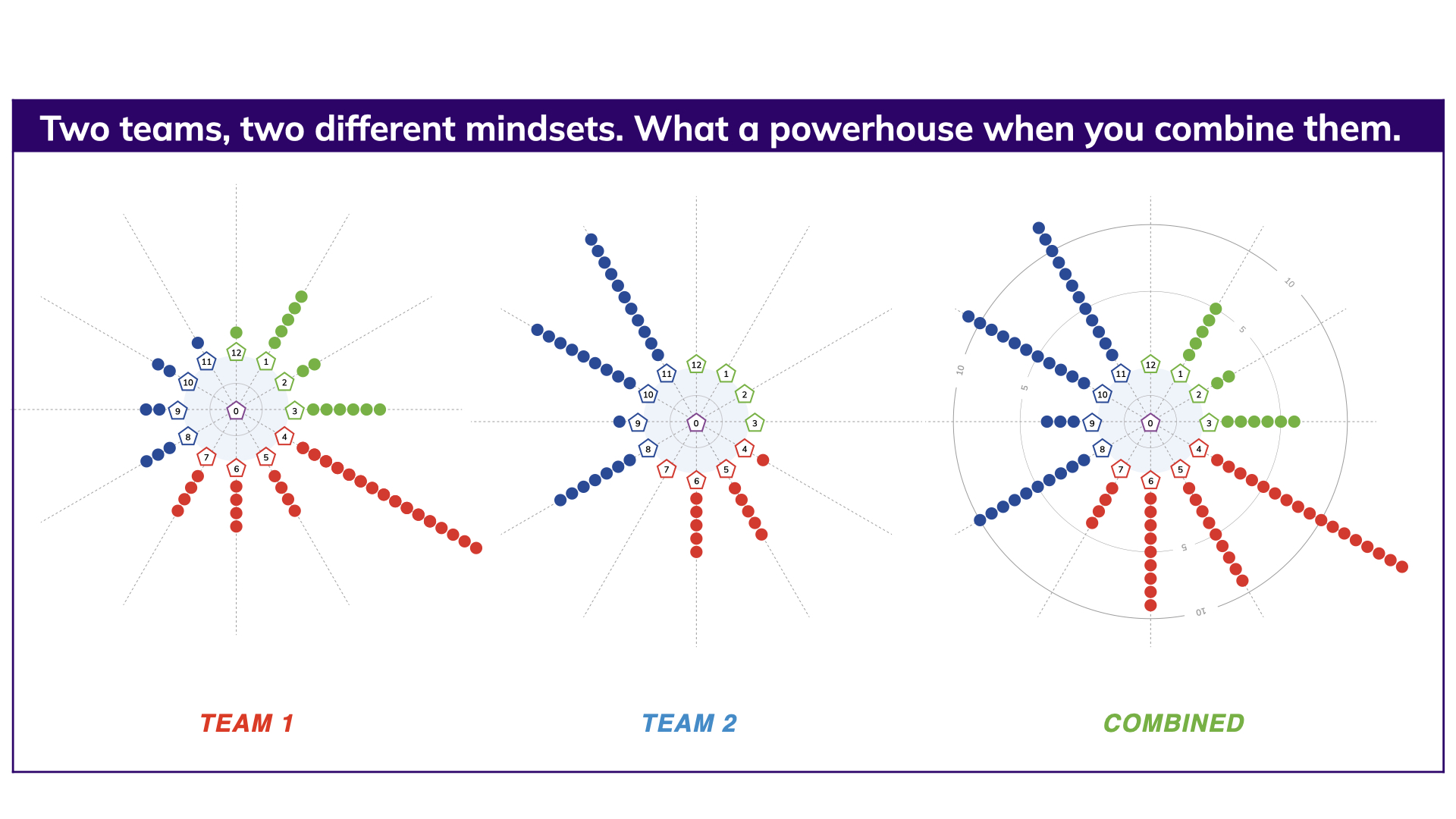
The Perfect Teams® Indicator provides a starting point.
The Team Map brings individual character profiles together, making the team’s composition visible.
Now we have something to discuss.
Not who’s good or bad.
Not who’s right or wrong.
Not whose personality is causing the trouble.
But what the team has, what it needs and how the people within it can contribute more effectively.
See what’s there. Find what’s missing. Build what’s needed.
Three deceptively simple steps.
Character Is Not Destiny
There’s another trap in profiling.
Once people have been given a description of themselves, they can begin treating it as a limitation.
“That’s just the way I am.”
Really?
I may have a natural preference for doing things one way. That doesn’t mean I’m incapable of learning another.
I may be uncomfortable with confrontation. That doesn’t mean I cannot develop the capability to handle difficult conversations.
I may not naturally take the lead. That doesn’t mean I cannot learn to lead.
Character provides a starting point. Capability determines what we become able to do.
That’s why Perfect Teams® is about development, not merely description.
And why our wider purpose is Building Human Capability.
You can’t download capability.
And you can’t download character.
Both have to be developed and demonstrated.
From Independence to Interdependence
This brings us to something I’ve been exploring for much of my working life.
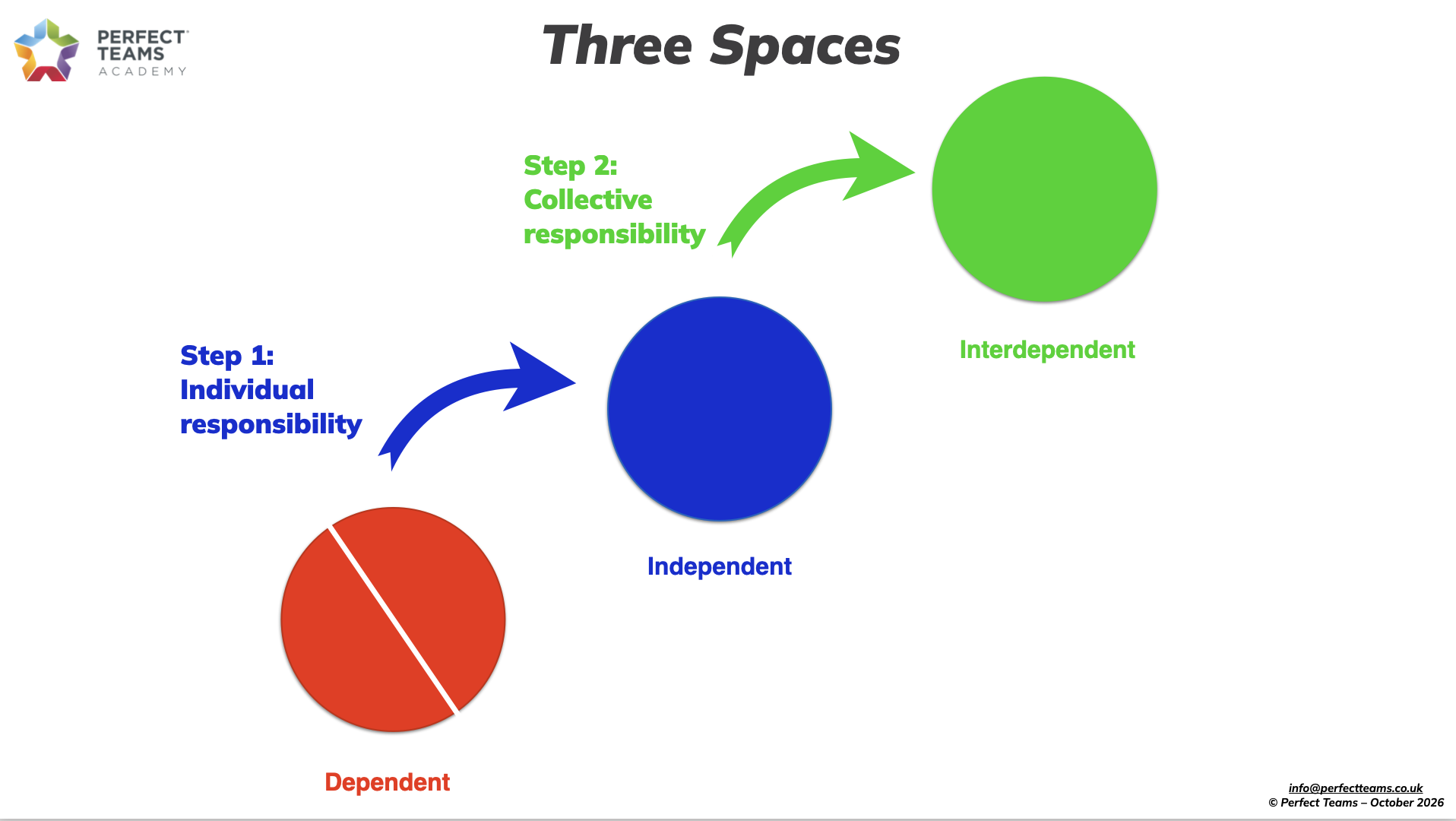
Three Spaces.
Dependence. Independence. Interdependence.
We begin by depending on others.
We develop the capability to take responsibility for ourselves.
But independence isn’t the destination.
It’s the bridge.
Because the greatest achievements in business, society and life rarely come from individuals working in isolation.
They come from capable people choosing to work together.
People who can contribute without dominating.
Challenge without undermining.
Disagree without destroying relationships.
Lead when necessary and follow when appropriate.
Interdependence is where individual capability becomes collective achievement.
And that, to me, is the real purpose of team development.
The Wrong Question?
For a century, we’ve invested enormous effort in understanding how people behave.
We’ve developed sophisticated instruments, models, assessments and language to describe the differences between us.
Some of that work has been valuable.
But perhaps we’ve become so good at describing people that we’ve forgotten to ask what we want them to become capable of doing.
And perhaps we’ve confused understanding a team with developing one.
The question isn’t simply:
“What sort of people have we got?”
It’s:
“What are these people capable of achieving together, and what’s preventing them?”
That’s a different conversation.
A different starting point.
And, I believe, a different category.
People Are Painful. Become the Person Who Solves It.
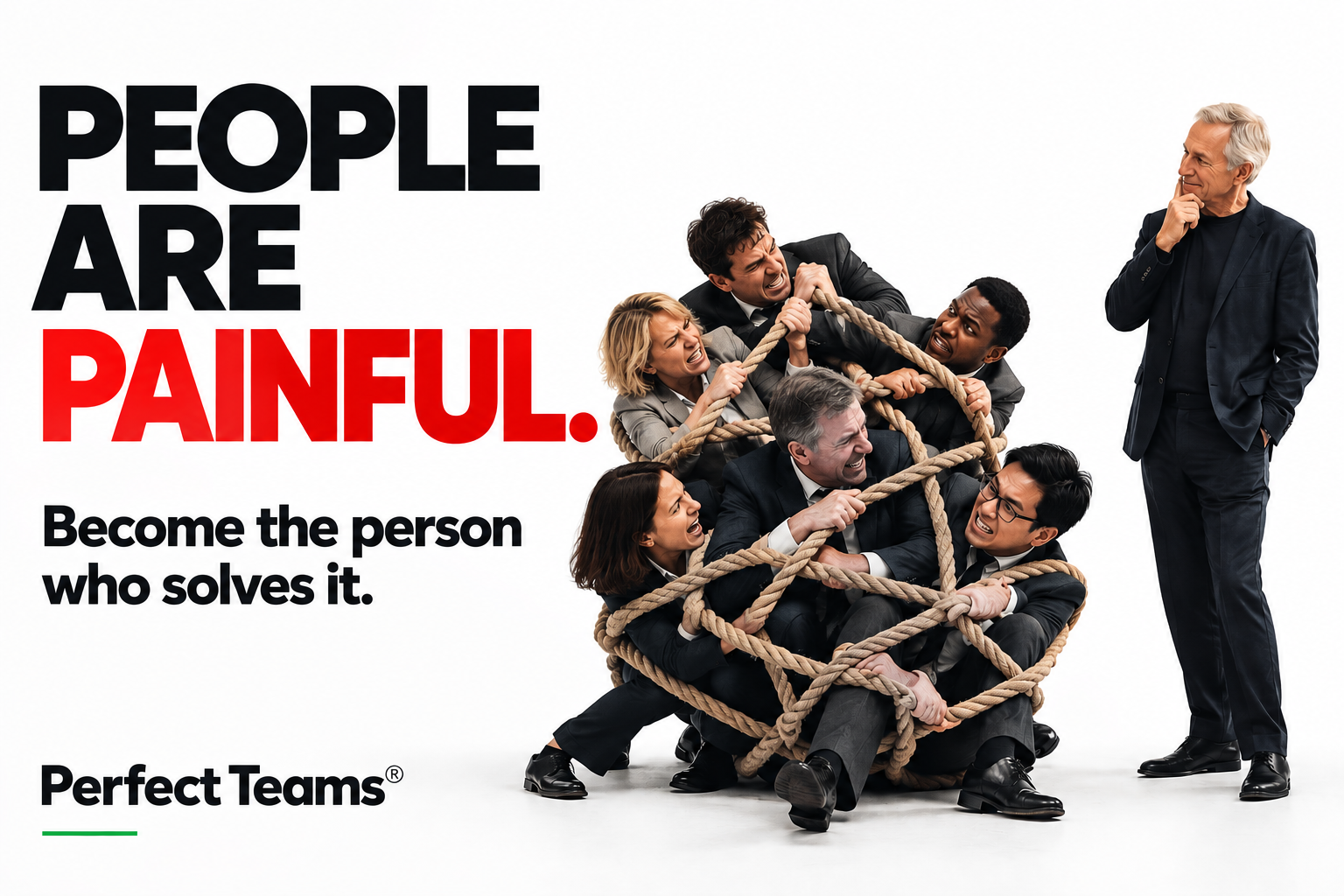
You can continue managing personality differences.
You can continue hoping that talented individuals will somehow become an effective team.
Or you can start building the character, capability and interdependence that make collective achievement possible.
That’s what Perfect Teams® was created to do.
Not to win the personality-profiling race.
To change the race altogether.
Which Side of the Problem Are You On?
People problems cost money, time and sleep.
Some people have them.
Others make a living solving them.
Perfect Teams® was developed for both.
- I HAVE A PEOPLE PROBLEM
You’ve got talented people, but something isn’t working.
Perhaps the team is missing something. Perhaps the capability is already there, but nobody knows how to bring it together.
- I SOLVE PEOPLE PROBLEMS
You’re a coach, consultant, facilitator or experienced business leader.
You understand people. You know how difficult they can be. And you’d like a practical system for helping organisations solve those problems.
Perfect Teams® gives you the framework, profiling tools, Team Maps and methodology to build a practice around developing human capability.
Two different starting points.
One proposition.
SEE WHAT’S THERE. FIND WHAT’S MISSING. BUILD WHAT’S NEEDED.
Perfect Teams® | Building Human Capability
You can’t download capability.™
You have to build it.
— Neil Tuson
First published November 17th, 2026.
 Article by: