

Why? How? When?
There are six questions I keep coming back to.
I didn’t invent them.
Rudyard Kipling got there first:
What. Why. When. How. Where. Who.
He called them his six honest serving men.
I’ve spent much of my life asking the same questions.
Recently, without planning it, I answered three of them.
Which rather obviously leaves three.
Why?
How?
When?
Perhaps it’s time I answered them too?
Why bother?
Because I believe we have a capability problem.
We have more knowledge than at any point in human history.
More information. More technology. More answers. More expertise available at the touch of a button.
And AI is accelerating all of it.
On 30 November 2022, ChatGPT arrived.
Another wake-up call.
Every generation seems to get one.
For mine, there was Neil Armstrong stepping onto the Moon in 1969. The Berlin Wall coming down in 1989. The horror of 9/11 in 2001.
Very different events.
But seismic moments when the world changed.
When the world before and the world afterwards didn’t feel quite the same.
AI feels like one of those moments.
And it raises a question I’ve spent most of my working life exploring:
What makes a human being capable?
Not knowledgeable. Capable.
Knowledge can increasingly be downloaded.
But as I’ve said before, “You can’t download capability.™”
Confidence. Responsibility. Initiative. Resilience. Influence. Communication. Leadership. Relationships.
You acquire those over time by living, trying, failing, practising, adapting and doing.
That’s why I bother.
Because the more knowledge becomes abundant, the more valuable human capability becomes.
How does it work?
Here’s where the Moon becomes useful.
In 1961, John F. Kennedy set America an extraordinary challenge: put a man on the Moon, and return him safely to Earth, before the end of the decade.
Strip away the history and look at the anatomy of the endeavour.
There was a Where and a When.
The Moon. By the end of the decade.
That’s Vision.
There was a Who and a Why.
A country, its people, its scientists, engineers and astronauts, galvanised around an endeavour that carried enormous national meaning.
That’s Purpose.
And there was a What and a How.
Rockets had to be designed. Astronauts trained. Experiments conducted. Manufacturers coordinated. Money found. Thousands upon thousands of problems solved.
That’s Mission.
Six questions.
Three dimensions:
Where & When — Vision.
Who & Why — Purpose.
What & How — Mission.
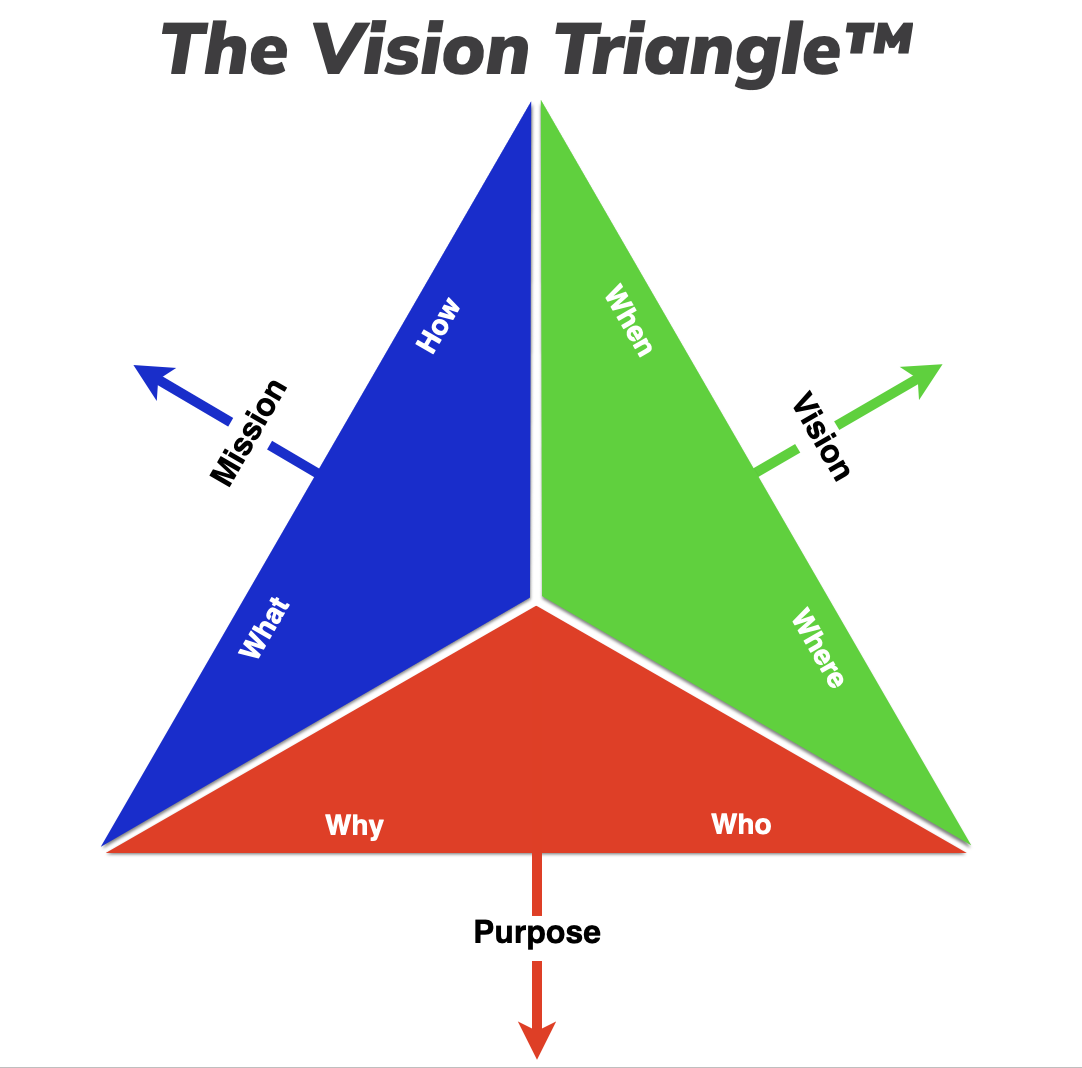
I’ve used that architecture for years.
Because Vision without Purpose and Mission is a dream.
Purpose without Vision and Mission is a cause going nowhere.
Mission without Vision and Purpose is activity without meaning.
You need all three.
And that’s also where Perfect Teams comes in.
Most teams spend an awful lot of time worrying about what they’ve got.
The people they have.
The skills they bring.
The experience they bring to the table.
The problems they’ve got.
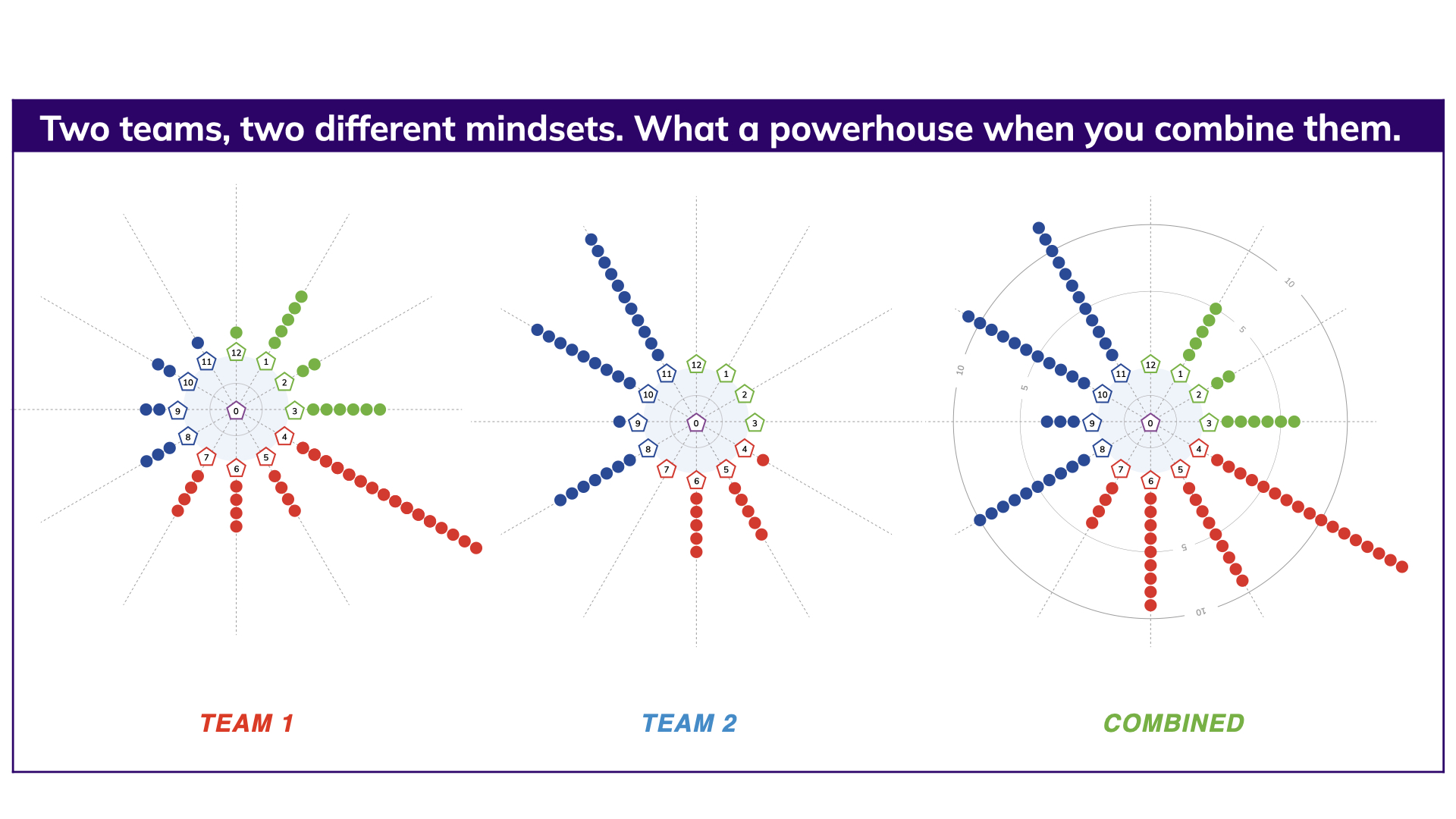
Perfect Teams makes those things easier to see by revealing the character each person naturally brings. The ‘Team Map’ then shows you the combination of what other people bring, but more importantly, the differences.
Then Perfect Teams asks another question:
What are you missing?
And that’s where it gets interesting.
Because you may be missing a capability.
You may be missing a perspective.
You may be missing why two perfectly capable people keep colliding.
You may be missing the person you need.
Or…
You may be missing something that’s already sitting in the room.
Perfect Teams shows you what you’re missing, and then you can do something about it.
Develop it.
Bring it in.
Or discover that somebody already possesses it and start using it.
That’s how Perfect Teams moves beyond character and builds capability.
Character shows what comes naturally.
Capability determines what becomes possible.
You can simply:
See what’s there.
Find what’s missing.
Build what’s needed.
When?
This may be the easiest question of the lot.
When you wake up.
When you realise that qualification alone isn’t enough to GET THE JOB.
When you realise PEOPLE ARE PAINFUL and having talented individuals doesn’t automatically create a capable team.
When you realise MONEY IS WORTHLESS without the time and freedom to enjoy it.
When you realise that what you have today isn’t necessarily what you’re going to need tomorrow.
That’s when.
My own wake-up call came long ago.
On 28 August 1963, Martin Luther King Jr. gave his I Have a Dream speech. When I encountered it, years later, one passage stayed with me: his hope that his children would one day be judged not by the colour of their skin, but by the content of their character.
Character.
That thought helped spark Perfect Teams, because I had my own dream:
That one-day character would trump personality.
I still believe that. But I’ve moved on.
Character is no longer the destination; it’s the starting point.
Understanding who you are is useful.
But understanding other people is more useful.
And being able to see what’s missing is most useful.
Eventually, though, something has to happen.
You have to become capable of doing something you couldn’t do before.
And perhaps that’s where Kipling’s six honest serving men have one limitation.
They are exceptionally good at helping us understand what is.
Who? Why? What? How? Where? When?
But there’s another question.
One that helps us see what isn’t.
What’s missing?
And it is our human capability that allows us to do something about it.
I’ve spent much of my life asking six honest questions.
They tell us an extraordinary amount about what’s going on.
But Perfect Teams has taught me to ask one more:
WHAT ARE YOU MISSING?
Because sometimes the thing you’re missing isn’t missing at all.
It’s already sitting in the room.
You just haven’t seen it yet.
Ready when you are.
PERFECT TEAMS®
It shows you what you’re missing.
Most teams spend an awful lot of time worrying about what they’ve got.
Perfect Teams shows them what they haven’t.
Then they can do something about it.
You may be missing something that’s already sitting in the room.
WHAT ARE YOU MISSING?
Please don’t like this article.
Send it to someone who needs to read it.
That, after all, is distribution.
Neil Tuson
Building Human Capability
You Can’t Download Capability™
First published October 26th, 2026.
 Article by: